District Health System in South Africa
The District Health System (DHS) is the cornerstone of an equitable, primary healthcare-led system in South Africa. Here, we capture the evolution of the DHS from its early days post-1994 to the present.

The South African Learning Alliance for the District Health System (SALAD) is a learning network established in 2023 to support the District Health System (DHS). It operates as a knowledge network and community of practice, collaborating to generate evidence, share experiences, and support one another through activities that evolve in response to emerging opportunities.
FIND OUT MOREIts membership includes senior and middle-level decision-makers from all nine provinces and the national government, health policy and systems researchers from nine higher education institutions, and non-governmental partners supporting various aspects of DHS development. It is composed of a core group and a wider network of hundreds of interested stakeholders who participate in webinars and other Alliance activities.
SALADs aims to facilitate knowledge and experience exchanges that enable bottom-up learning. This learning then supports the DHS in identifying future policy and strategy needs within and across settings. It recognises the strategic importance of primary health care and its contribution to universal health coverage. Ultimately, the network strives to strengthen sub-district and district health systems, thereby improving health outcomes. For more information on the role and importance of the DHS, scroll to the bottom of this page.
The District Health System (DHS) is the cornerstone of an equitable, primary healthcare-led system in South Africa. Here, we capture the evolution of the DHS from its early days post-1994 to the present.
Across South Africa, district health system leaders are imagining innovative ways to understand community health needs and integrate community voices and priorities into primary health care and public health through community-oriented primary care (COPC). Here, we explore COPC approaches implemented across South Africa.
To address the complex frontline realities of South African communities, the district health system must continually monitor, evaluate and learn (MEL) about what is working, what is not, and how needs are changing. Here, we explore innovative approaches to MEL across the health system.
Quality healthcare in South Africa requires the careful management of limited financial resources. Here, we look at strategies for managing those resources in innovative ways.
Leadership in South Africa’s DHS requires motivating and coordinating local providers while facilitating whole-of-government and whole-of-society collaboration. Here, we explore how to strengthen and conceptualise leadership without exercising traditional command-and-control managerial authority.
Quality health services require complex systems and processes to work together in harmony. Here, we explore various elements of the DHS that impact the quality of health services with an emphasis on successful models from across the country.
Hosted a national webinar series, engaging practitioners, decision-makers, and researchers on key challenges, strategies, and innovative practices in the DHS.
Published a special series on the DHS within the South African Medical Journal to share experiences and stimulate national debate, co-authored by government officials, front-line implementers and researchers.
Co-hosted a national workshop on community-oriented primary care (COPC) with the Western Cape Department of Health & Wellness.
Completed a retrospective review of DHS policy-making in South Africa since 1994, including gathering and analysing over 100 documents.
Hosted dialogues and experience exchange sessions at various local and international conferences.
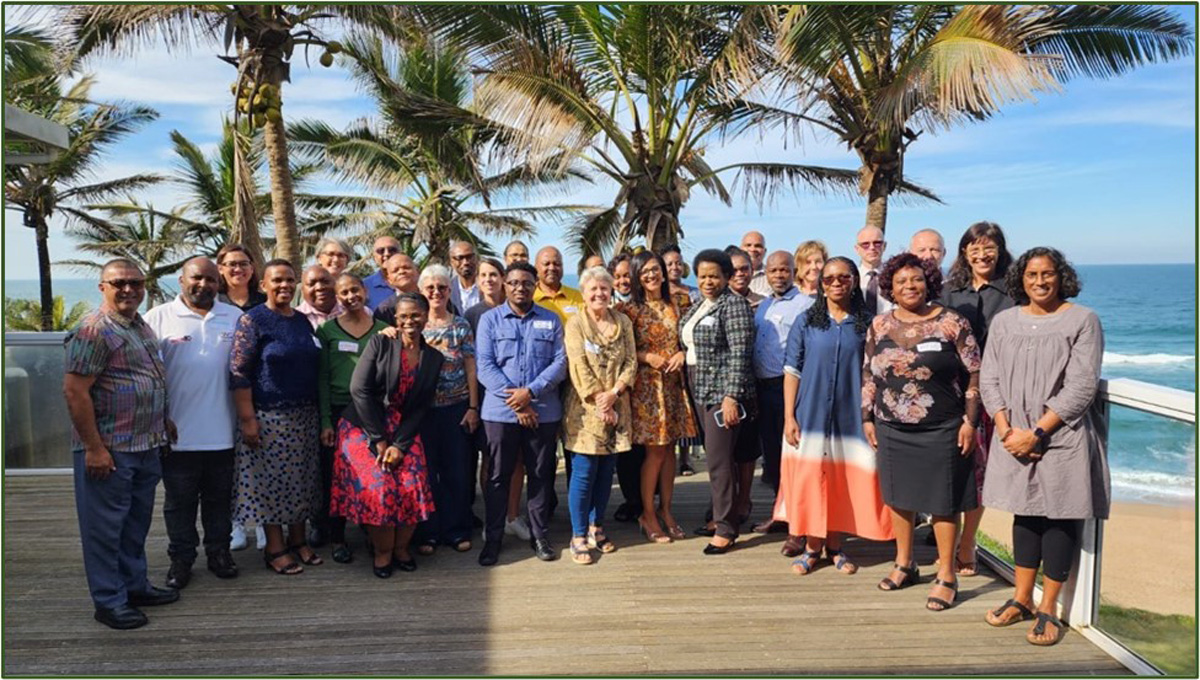
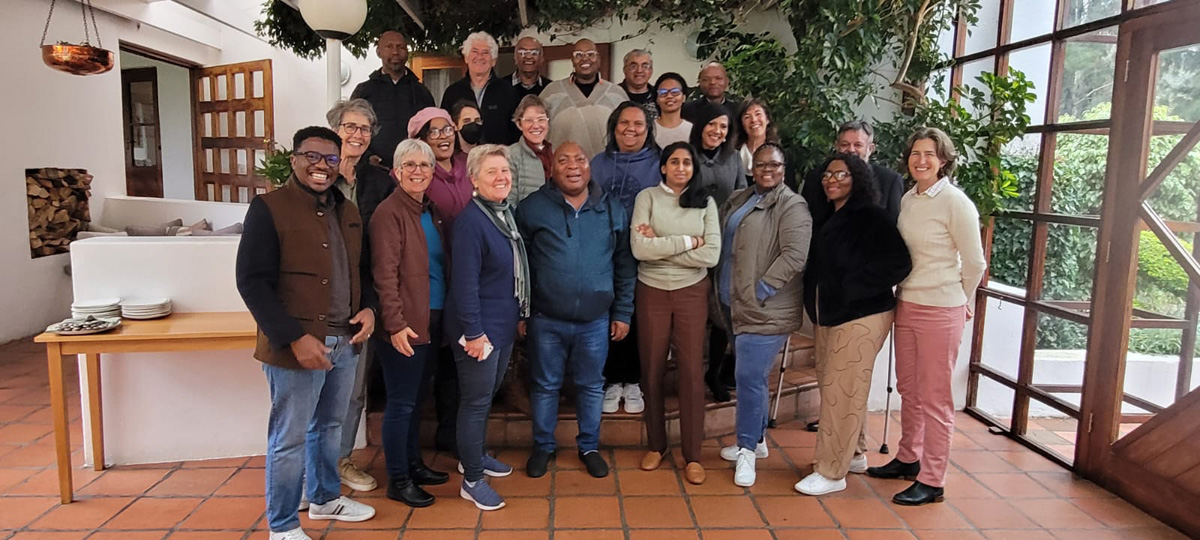
Convened annual national retreats to review activities, reflect on purpose/identity, and chart future directions.
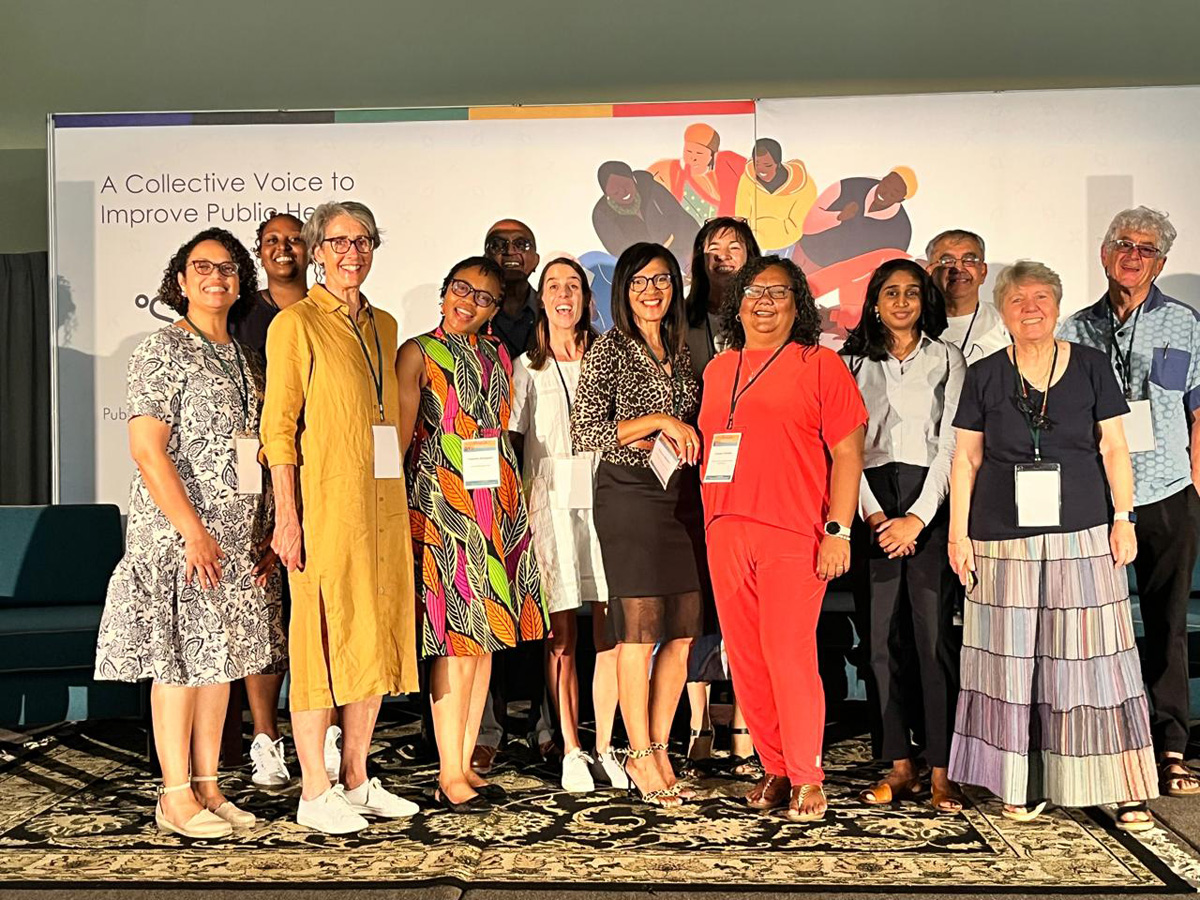
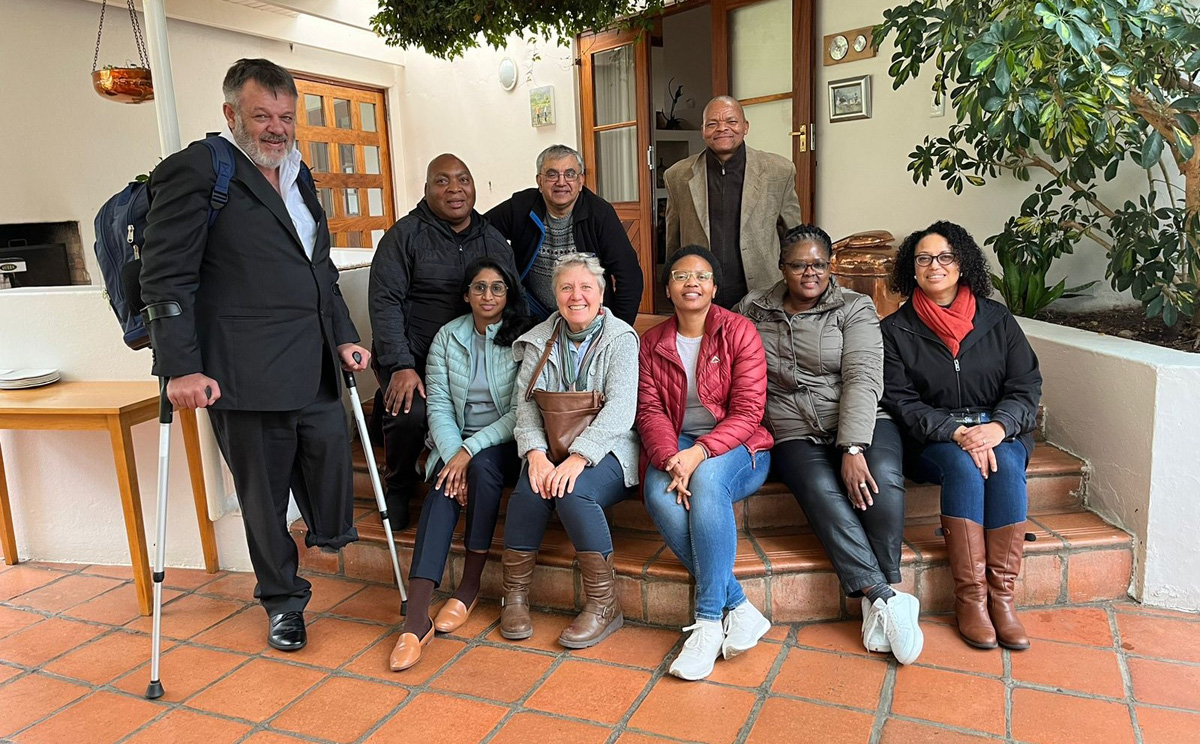
In addition, the Provincial Engagement Working Group brings together senior managers from all provinces to share best practices and discuss practical solutions relevant to the DHS. The Knowledge and Dissemination Working Group focuses on webinars, publications, and conference engagement. A small but diverse Steering Group oversees efforts across the working groups while the Secretariat, housed at the University of the Western Cape and the University of Cape Town, manages day-to-day administration and coordination.
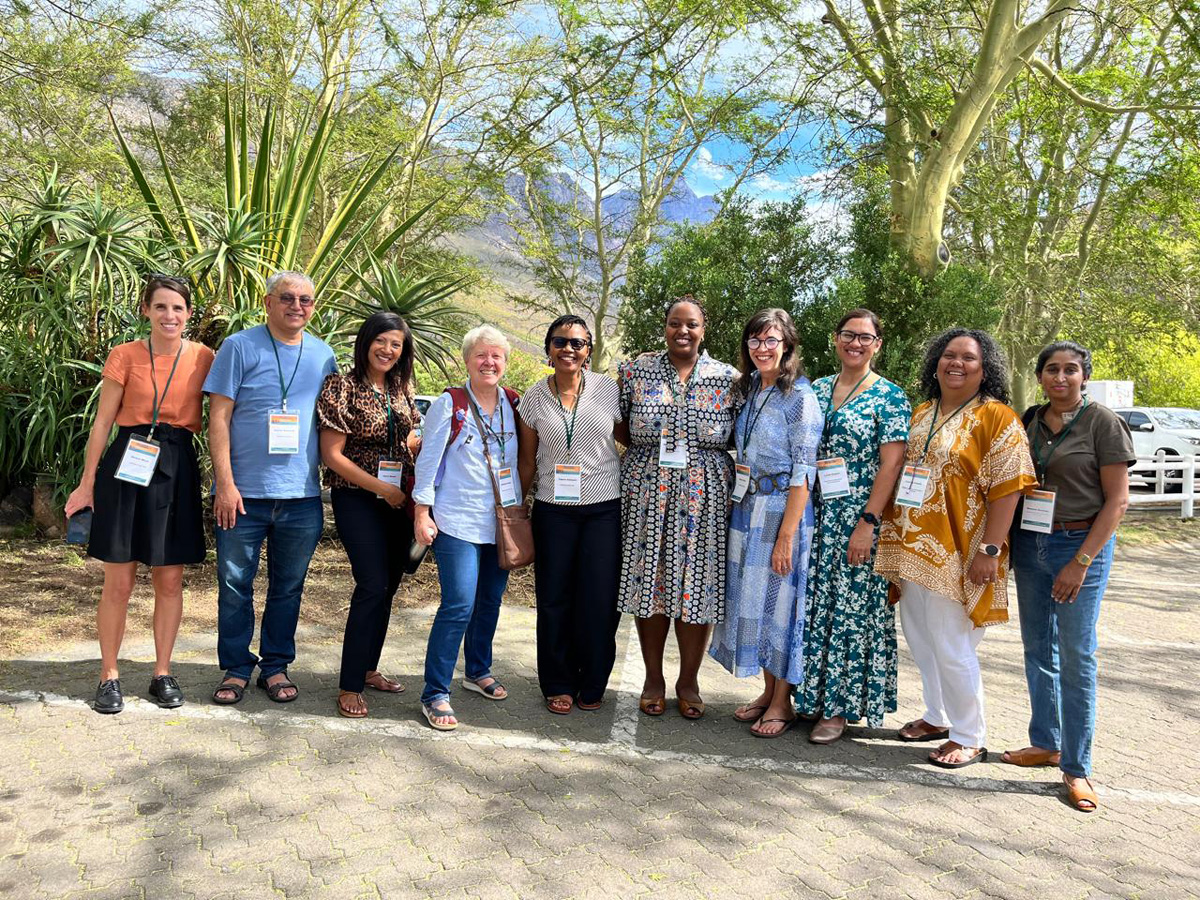
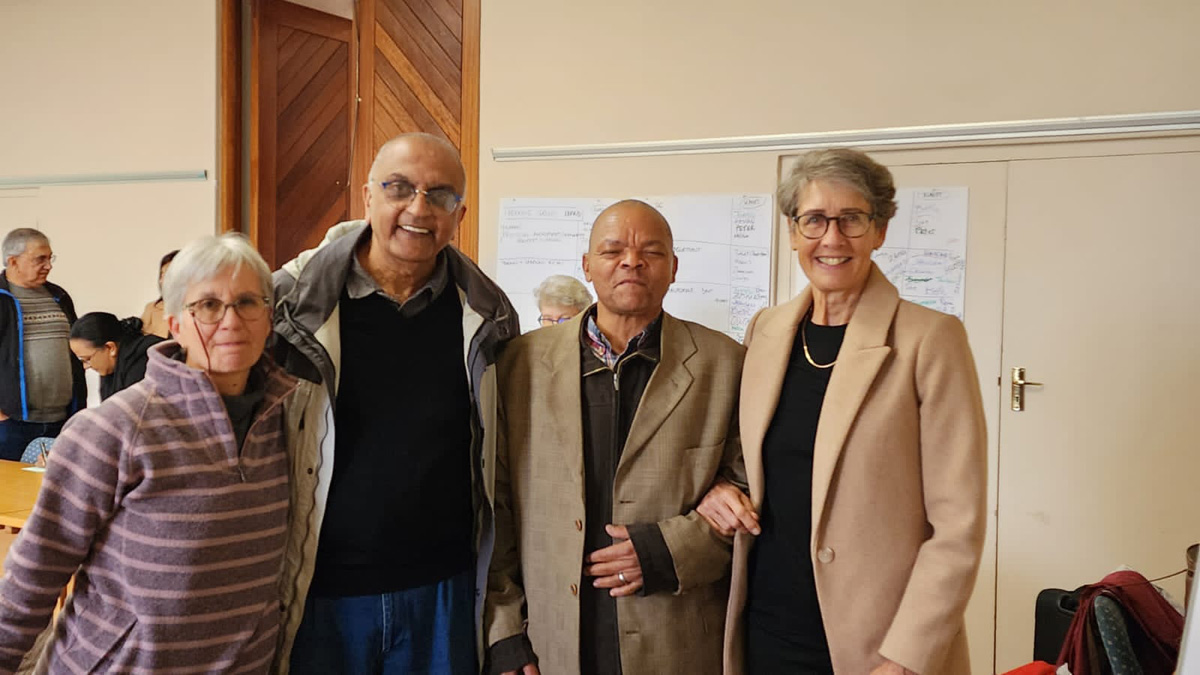
The DHS was formally established by the National Health Act of 2003 as the most decentralised public governance structure for achieving an equitable, primary health care-based health system. Although attention shifted to specific disease priorities after 1994, leading to fragmented interventions and underdeveloped sub-district governance, the district and sub-district are now resurfacing as important units of governance and innovation in South Africa.
The need for new paradigms of integrated service delivery, intersectoral collaboration, and a greater orientation towards health promotion, disease prevention, health, and wellness.
Renewed recognition of the importance of engaging communities, the public, patients, and frontline providers in the co-creation of health and wellness.
National Health Insurance reforms, which are focused on district-level structures like 'contracting units for primary healthcare' and district health management offices.
Multiple intersecting crises, including COVID-19, climate change, socio-economic vulnerability, and reduced budgets, necessitate new ways of working within health systems.

By: E Whyle, T Assegaai, M Smuts, P Barron, T Masilela, K Vallabhjee, B Engelbrecht, L Gilson, H Schneider
By: H Schneider, T Masilela, J Mndebele, K Vallabhjee, I Petersen, L Gilson, B Engelbrecht
By: L Gilson, H Schneider, B Engelbrecht, M Shung-King
By: P Barron, H Mahomed, TC Masilela, K Vallabhjee, N Ndlovu, C Goliath, H Schneider
By: K Govender, H Schneider, L Gilson, R Mash, E Whyle, O Motshweneng, N Nkosi, C Goliath, H Mahomed, S Kariem
By: C Goliath, R Mash, H Mahomed
By: Z Luvuno, J Mndebele, H Langa, A van Rensburg, B Gaede, L Fairall, A Bhana, T A Kathree, I Petersen
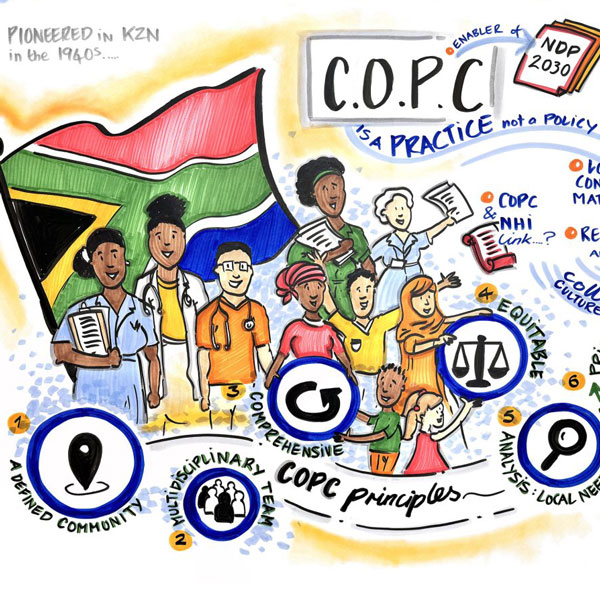
The Western Cape Department of Health & Wellness together with the UWC and UCT Schools of Public Health recently came together to host a one-day workshop on Community-Oriented Primary Care.
By: O Motshweneng, S Elloker, L Gilson
By: K Govender, N Rambau, P Barron, B Setshogelo, K Vallabhjee, M Nyathi, H Schneider, S Xaba, N Mopofu, A Yawa
By:
L Gilson, O Motshweneng
By: P Barron, B Honermann, K Vallabhjee, K Govender, H Schnedier
By: Barron P, Mahomed H, Masilela TC, Vallabhjee K, Schneider H.
By: Schneider H, Mukinda F, Cupido J, Wessels J, Kupa P, Leboho P
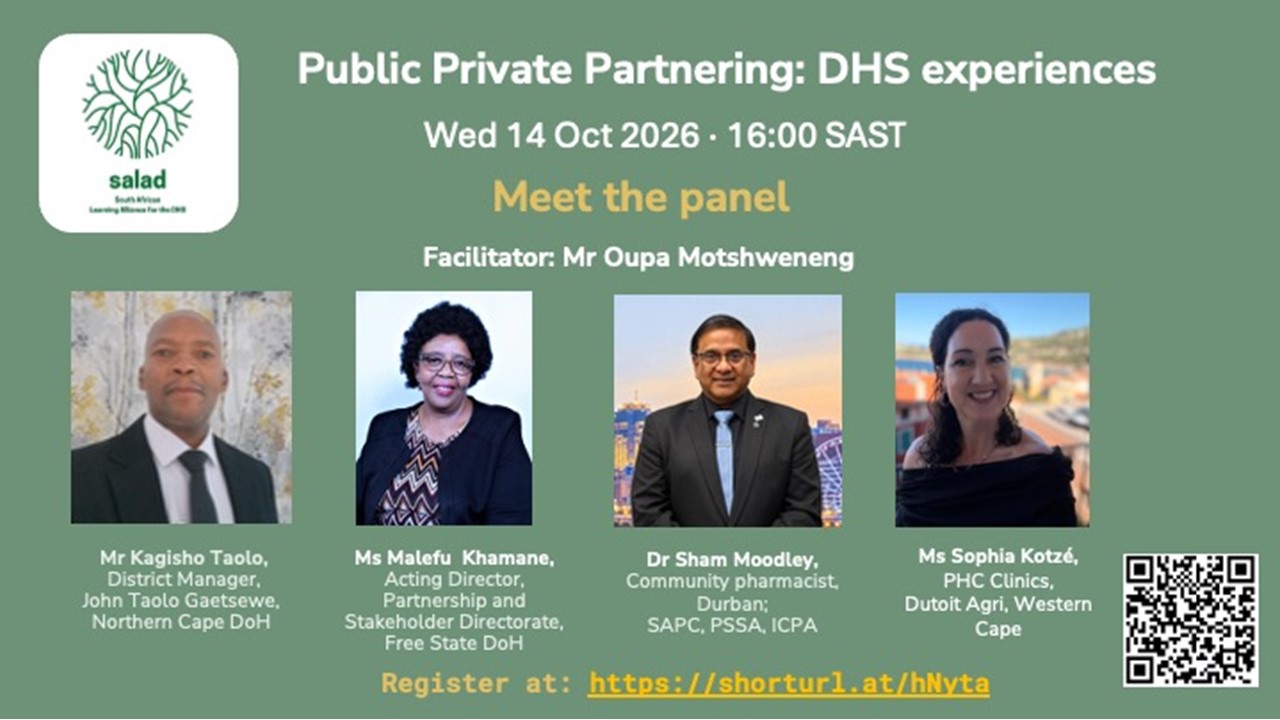
On 14 October 2026, SALAD hosted a webinar featuring two pairs of presentations. The first pair focused on the public sector’s perspective and the second on the private sector’s, with audience engagement in between. Across these presentations, attendees heard about how public-private partnering can advance the District Health System (DHS).
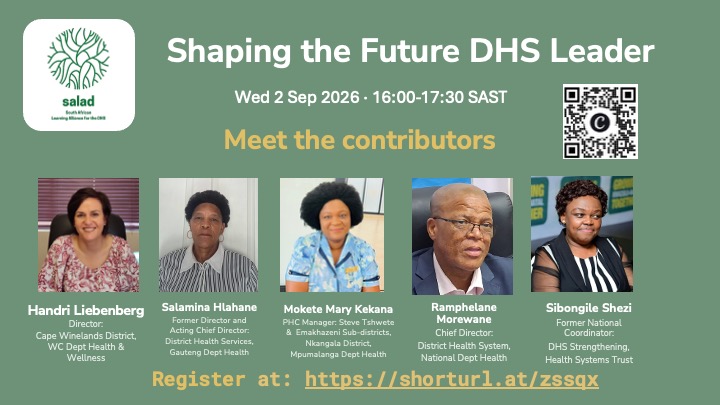
This September 2026 webinar featured several current and former DHS leaders, each sharing practical knowledge they wish they’d had when they started. Themes discussed include stakeholder management, self-management, navigating complexity, and data-informed decision-making.
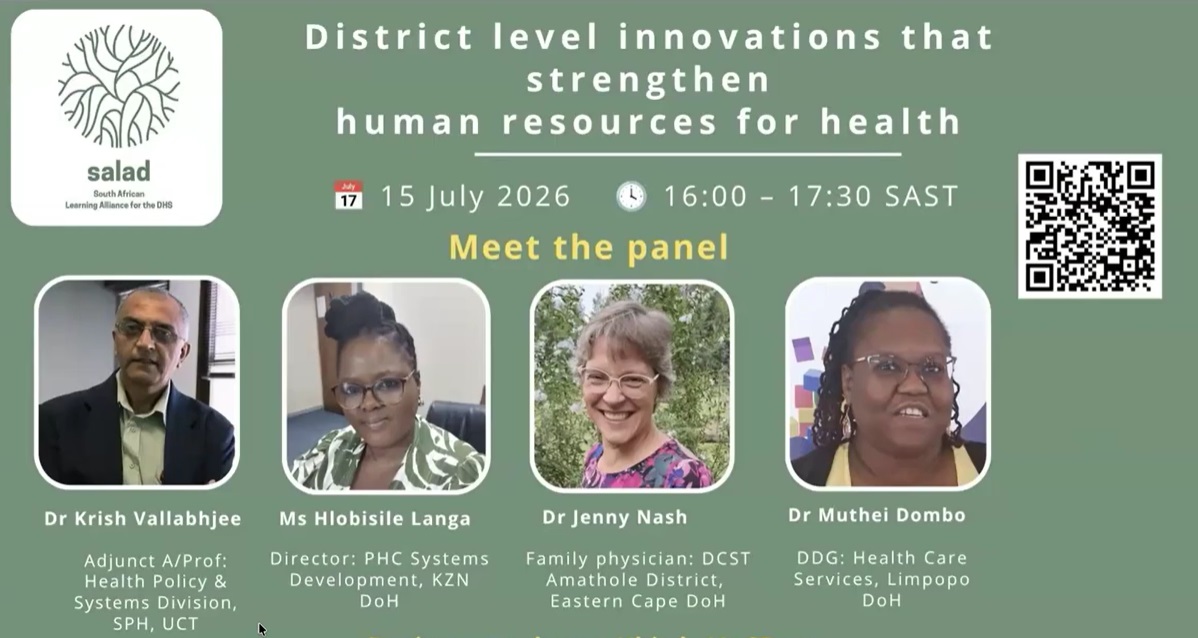
This July 2026 webinar explores strategic and systemic innovations designed to strengthen and support the health workforce within the DHS. Speakers discuss the integration of 5,000 community health workers into formal structures in KwaZulu-Natal, virtual clinical mentorship in the Eastern Cape, and recruitment strategies in Limpopo.
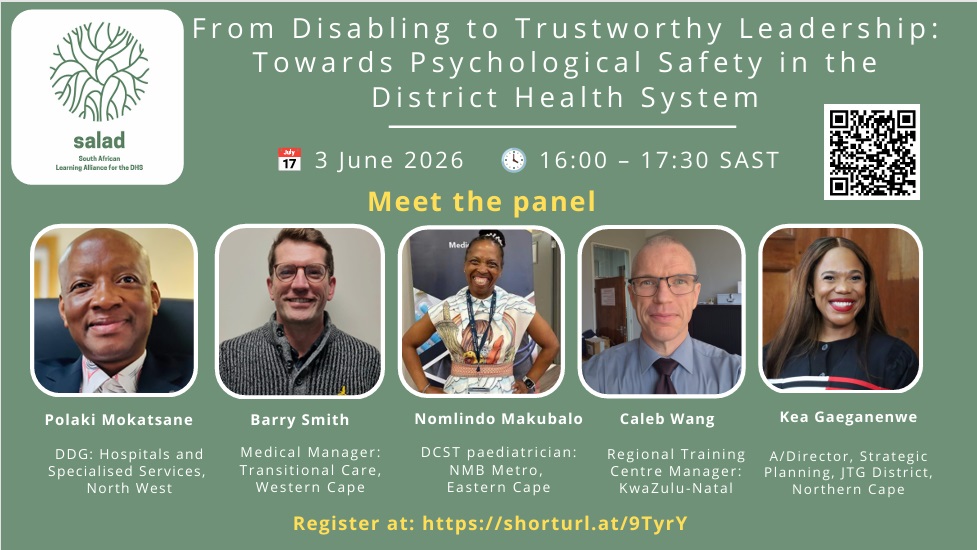
This June 2026 webinar examines the shift from a punitive, compliance-driven management culture toward a culture that prioritizes psychological safety and encourages staff to openly report errors and fail safely. Speakers highlight how leadership styles impact workplace trust and team performance, concluding with a call for distributed and relational leadership models to build a resilient health system rooted in empathy and continuous learning.
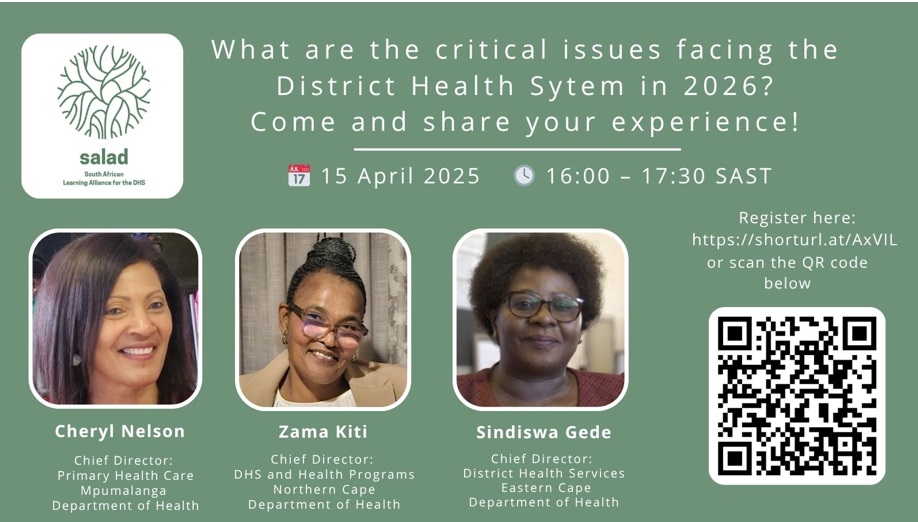
This April 2026 webinar identifies pressing challenges such as rapid population growth, the nursing exodus, and the financial burden of medical-legal claims.
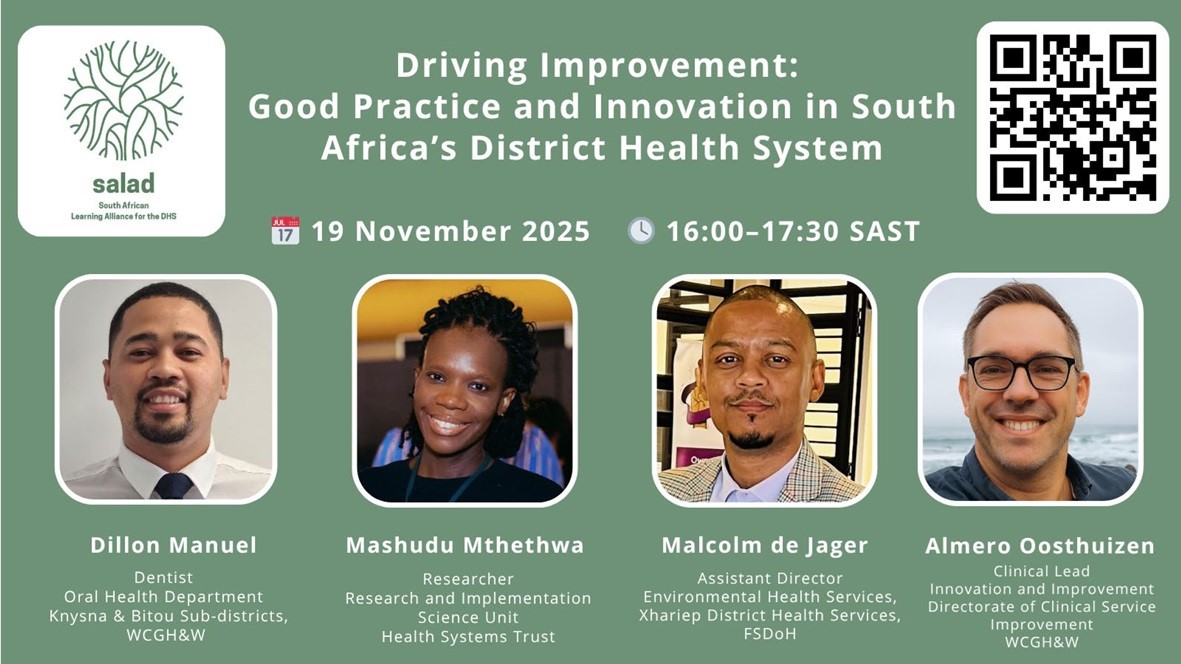
This November 2025 webinar highlights creative ways that district teams solve complex problems with limited resources.
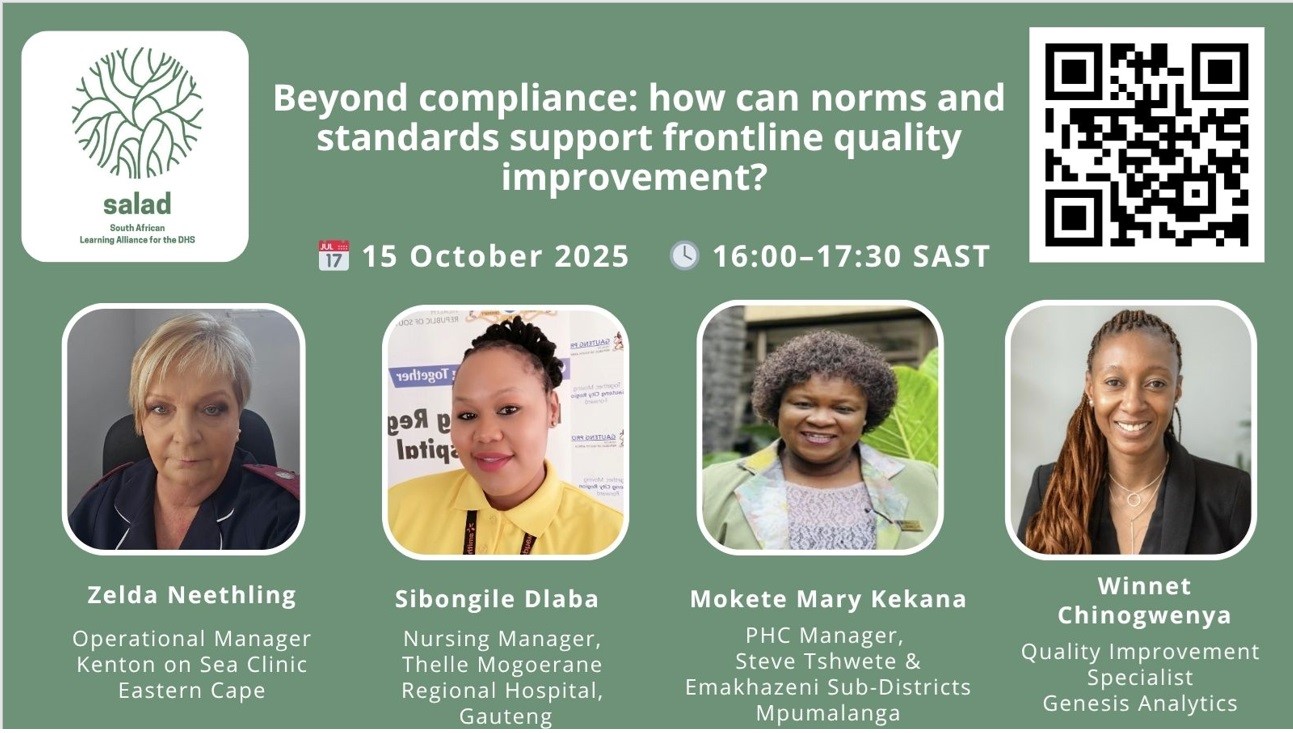
This October 2025 webinar investigates how to transition away from “malicious compliance” towards real frontline improvement across South Africa’s DHS.
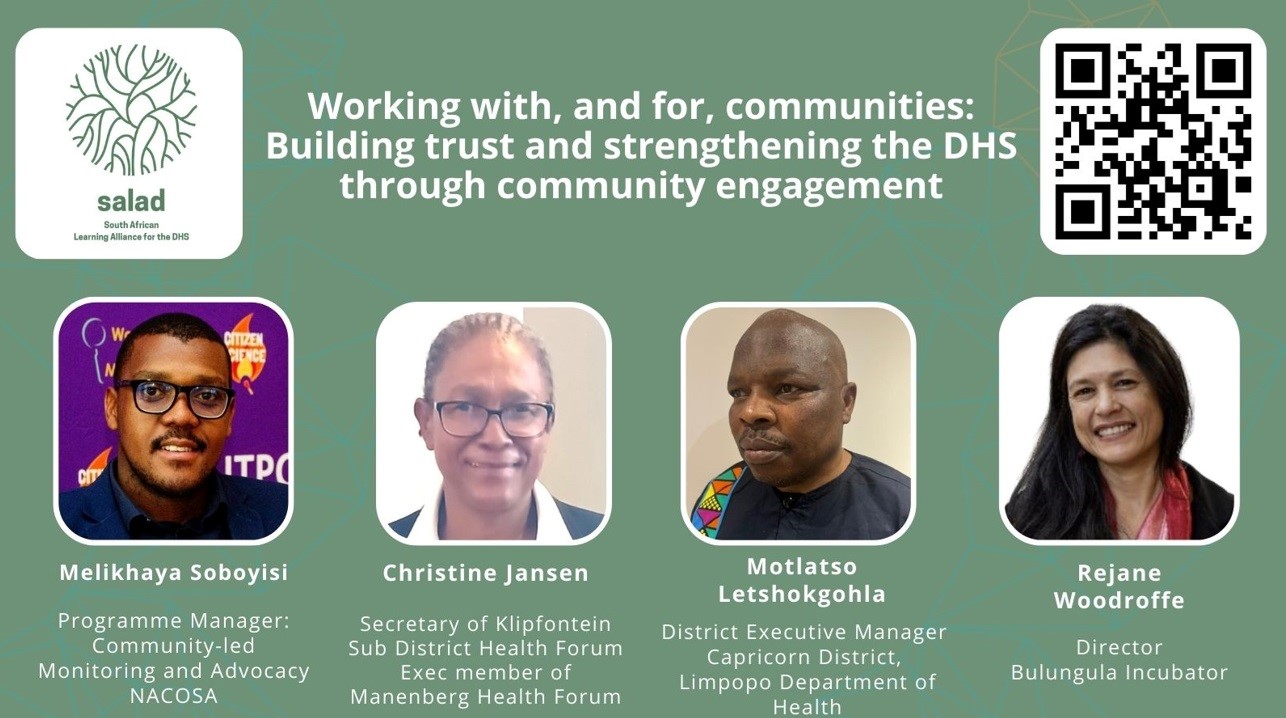
This September 2025 webinar shares real-world success stories like community-led monitoring and integrated rural development models.
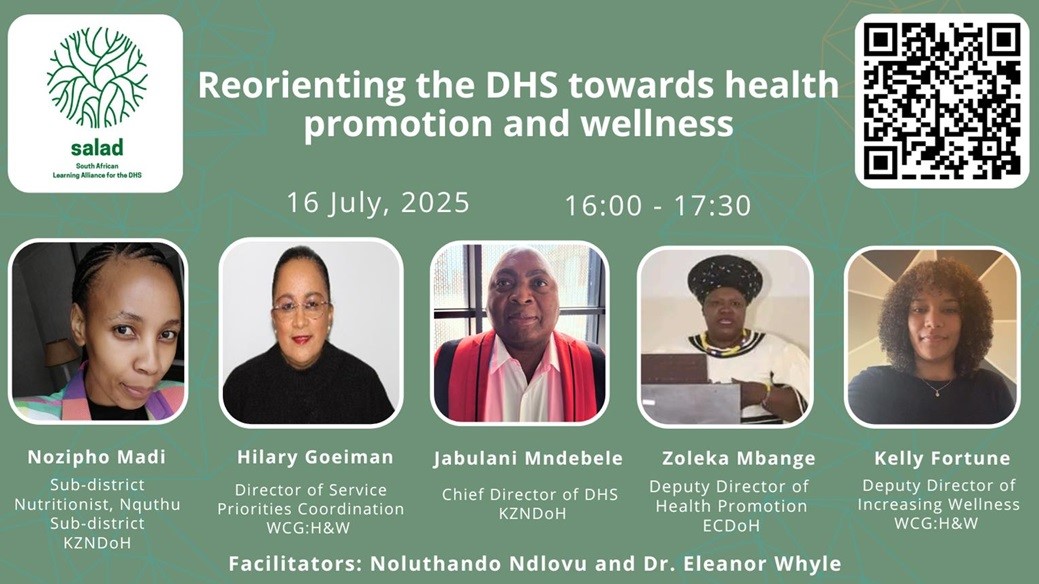
This July 2025 webinar explores how the South African DHS can move away from vertical programmes towards a focus on prevention, early intervention, and people-centred care.
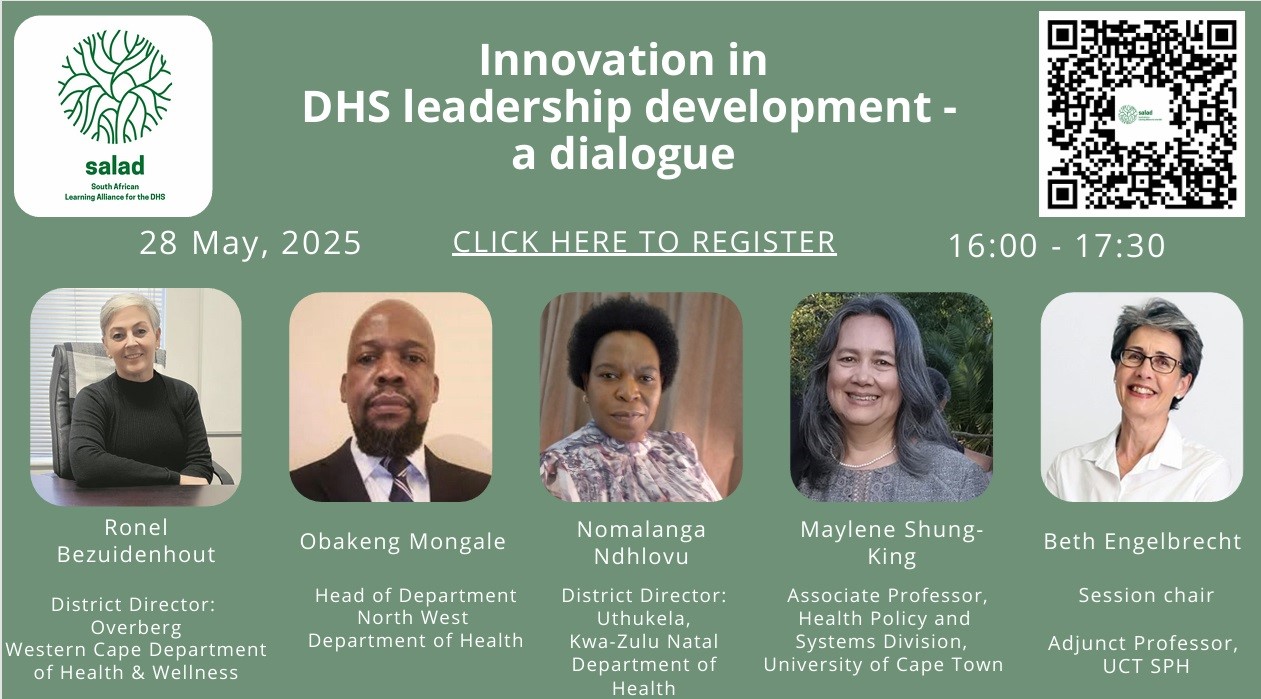
This May 2025 webinar explores new approaches to leadership development via workplace-based learning and the evolving role of mentorship as a mutually enriching process for mentor and mentee.
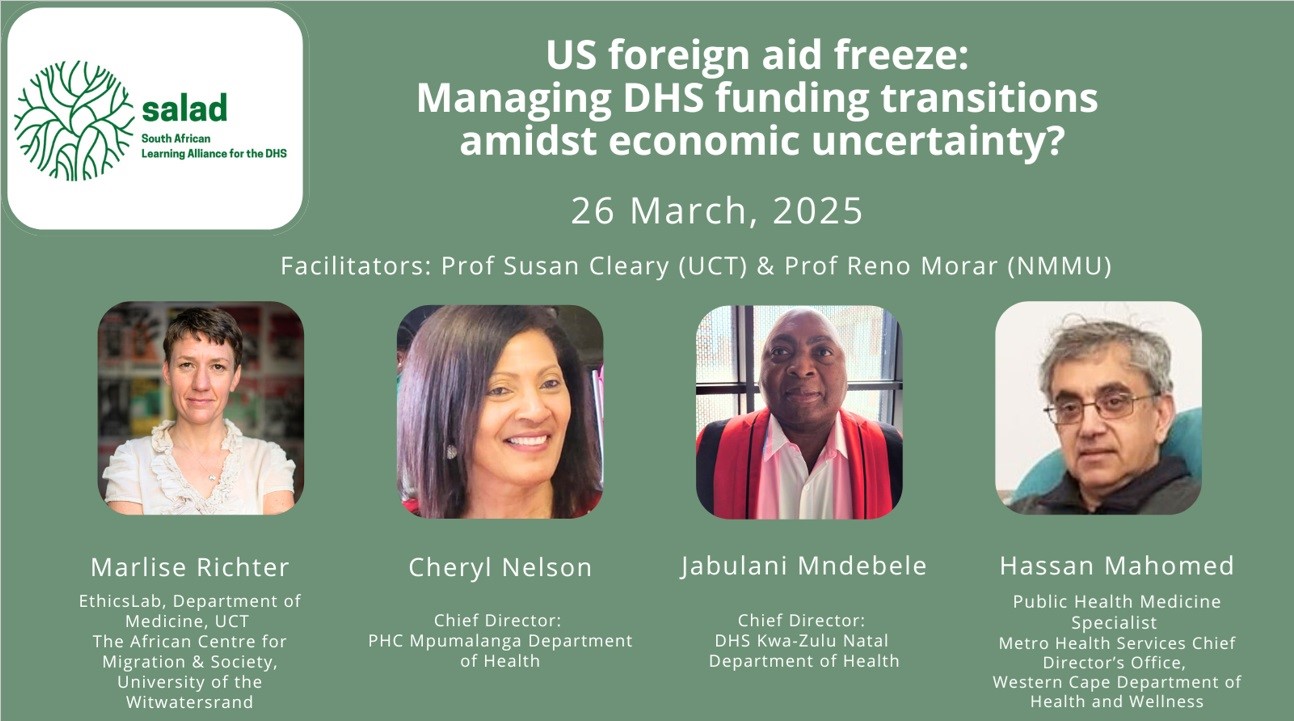
This March 2025 webinar addresses the sudden and disruptive suspension of USAID and PEPFAR funding in South Africa. Speakers report on the immediate service impacts and job losses, while identifying strategic opportunities to transition toward local ownership and integrated, person-centred care.
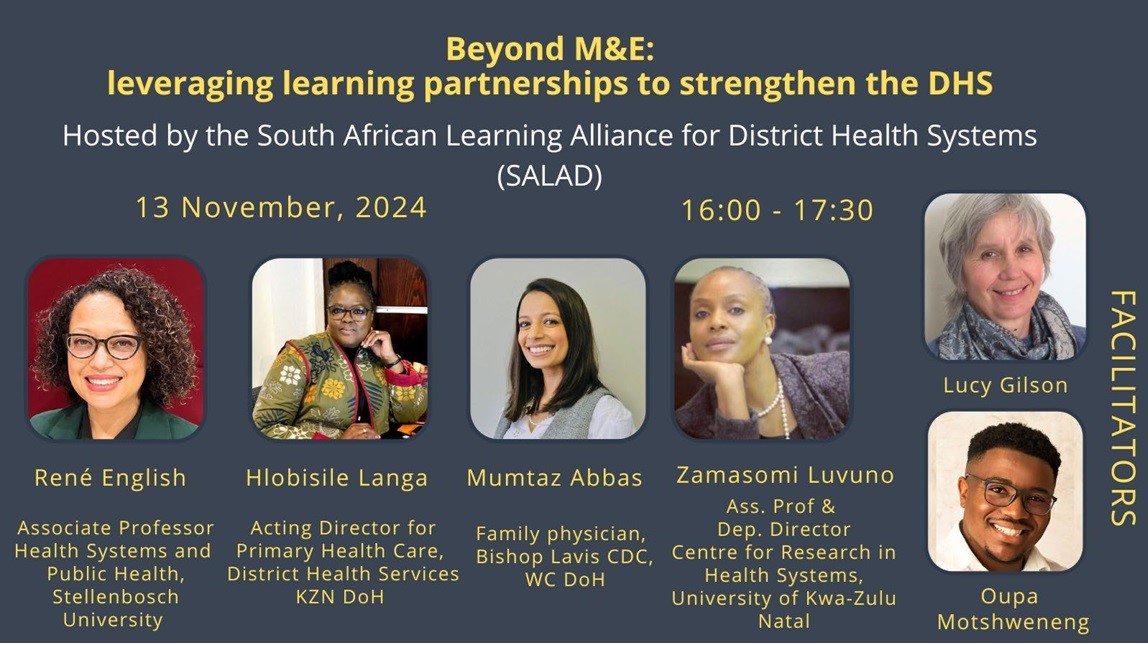
This November 2024 webinar showcases collaborative partnerships between communities, academics and health managers in KZN and the Western Cape, highlighting the value of “warm data” and tacit knowledge in strengthening the system.
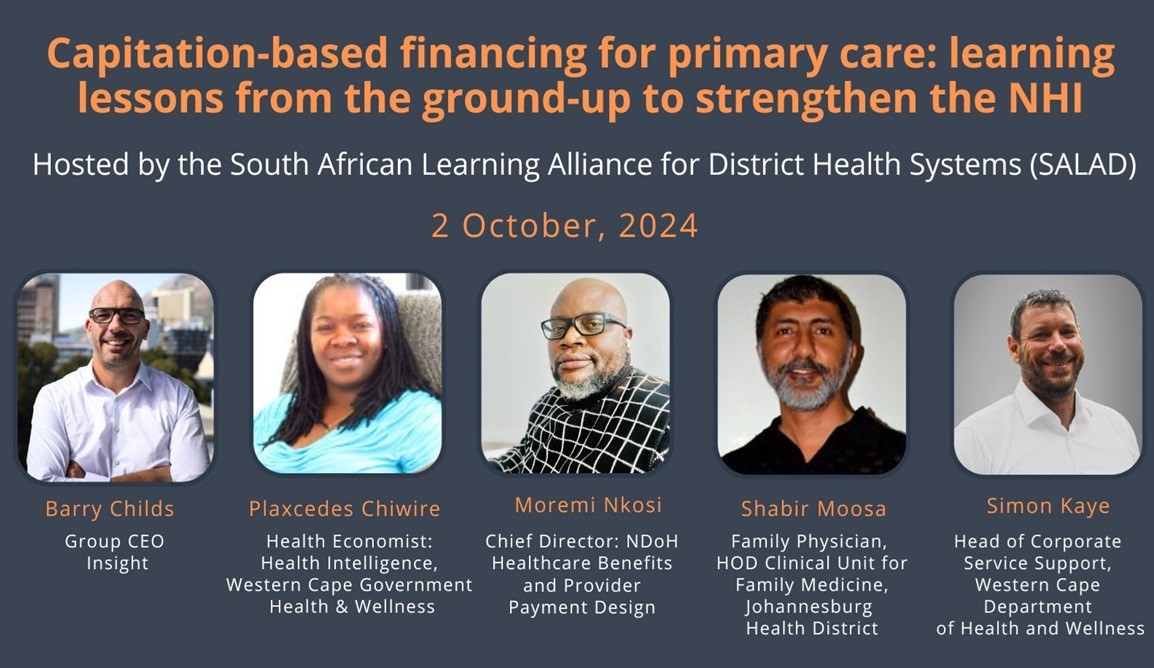
This April 2024 webinar examines capitation-based financing mechanisms within the context of National Health Insurance (NHI) reforms.
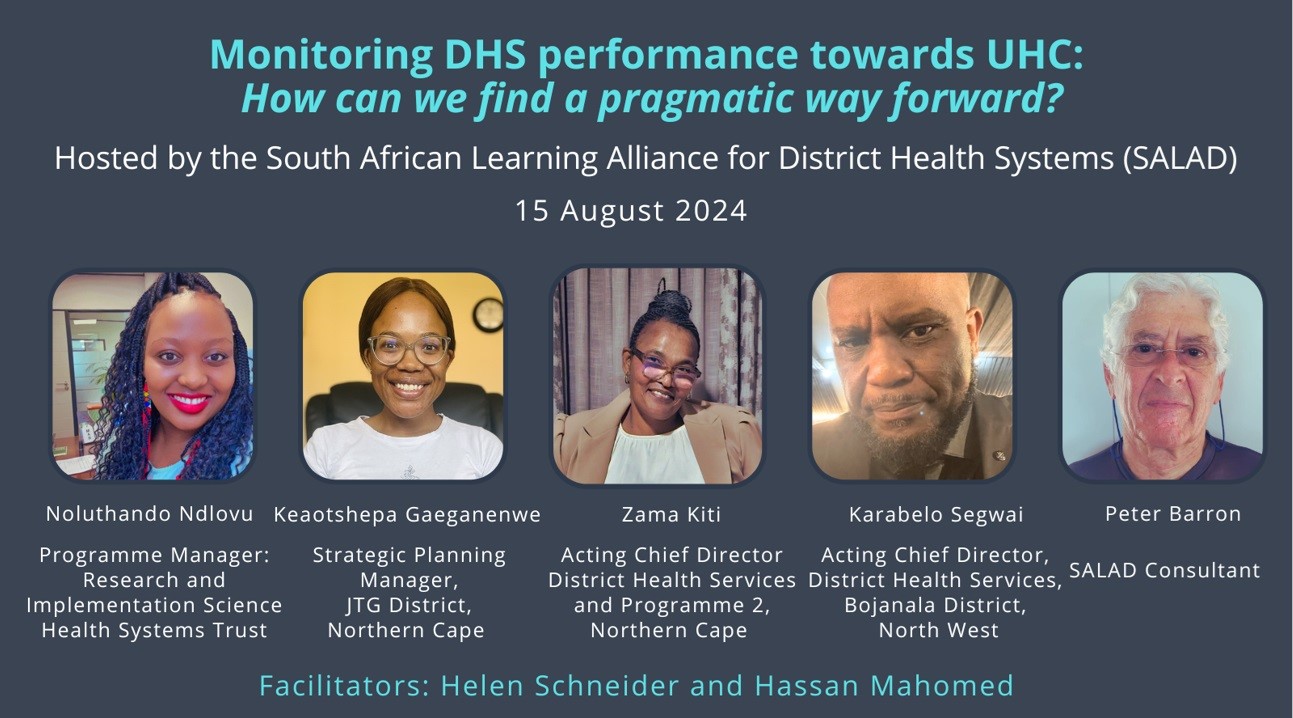
This August 2024 webinar examines current monitoring and evaluation (M&E) processes in the DHS, challenges and gaps, and alternative ways to strengthen M&E and support health system decision-making.
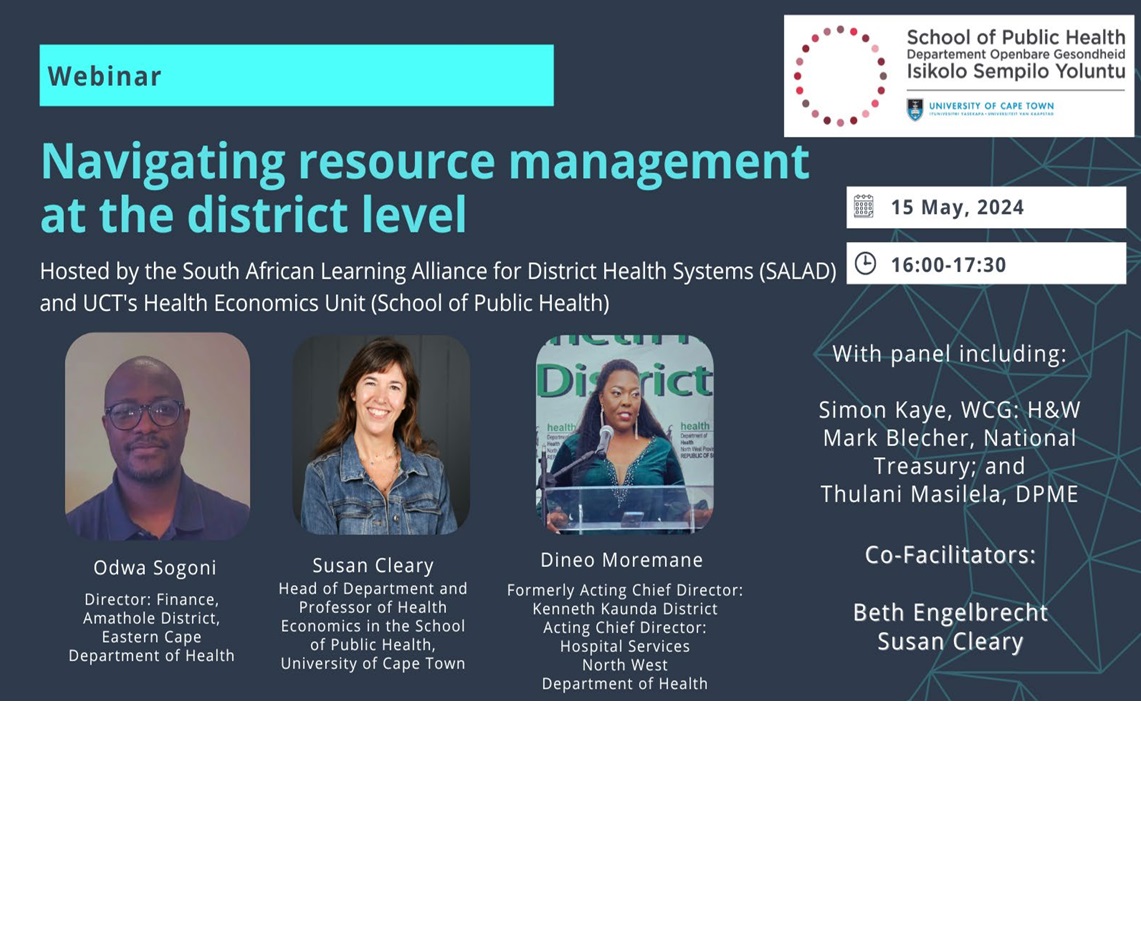
This May 2024 webinar explores district-level resource management, with a focus on the financial management capacities required within the DHS. Speakers share their work in resource management and the skills required to function effectively in financial management roles while a panel shares recommendations for effective and efficient financial management in the DHS.
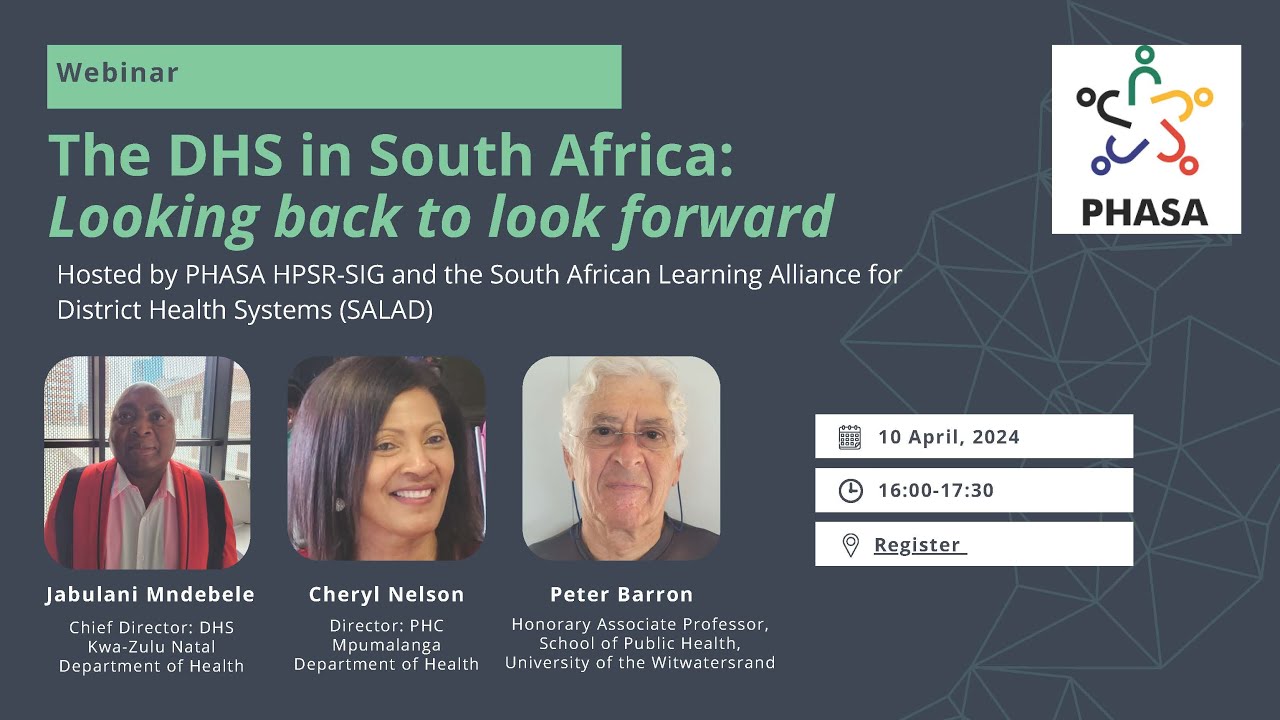
Hosted by PHASA HPSR-SIG and the South African Learning Alliance for District Health Systems (SALAD)
This October 2023 webinar investigates the impact of fiscal consolidation and cost-containment measures on South Africa’s health sector.
Mpumalanga’s Gert Sibande District reframed the Ideal Clinic/Hospital and Office of Health Standards Compliance (OHSC) assessments – frequently seen as compliance tools –to guide and support system wide improvements for all primary health care (PHC) and hospital facilities. Using a multi-level, phased and multi-pronged approach over 3 years, the district achieved Ideal Clinic Status, Ideal Hospital Status, and OHSC certification of all 73 PHC facilities and 9 hospitals, while also improving patient outcomes.
The DHS is the foundation of South Africa’s public health system and the platform for delivering primary health care. It provides promotive, preventive, curative, and rehabilitative services; builds health governance closer to users and communities; implements change; and generates bottom-up innovation.
SALAD is a learning network and community of practice, established in 2023, bringing together researchers and decision-makers across provinces to: enable knowledge generation, sharing and learning; identify and disseminate innovations and priorities across provinces; strengthen the DHS for improved health outcomes. Learn more about the network in this briefing note.
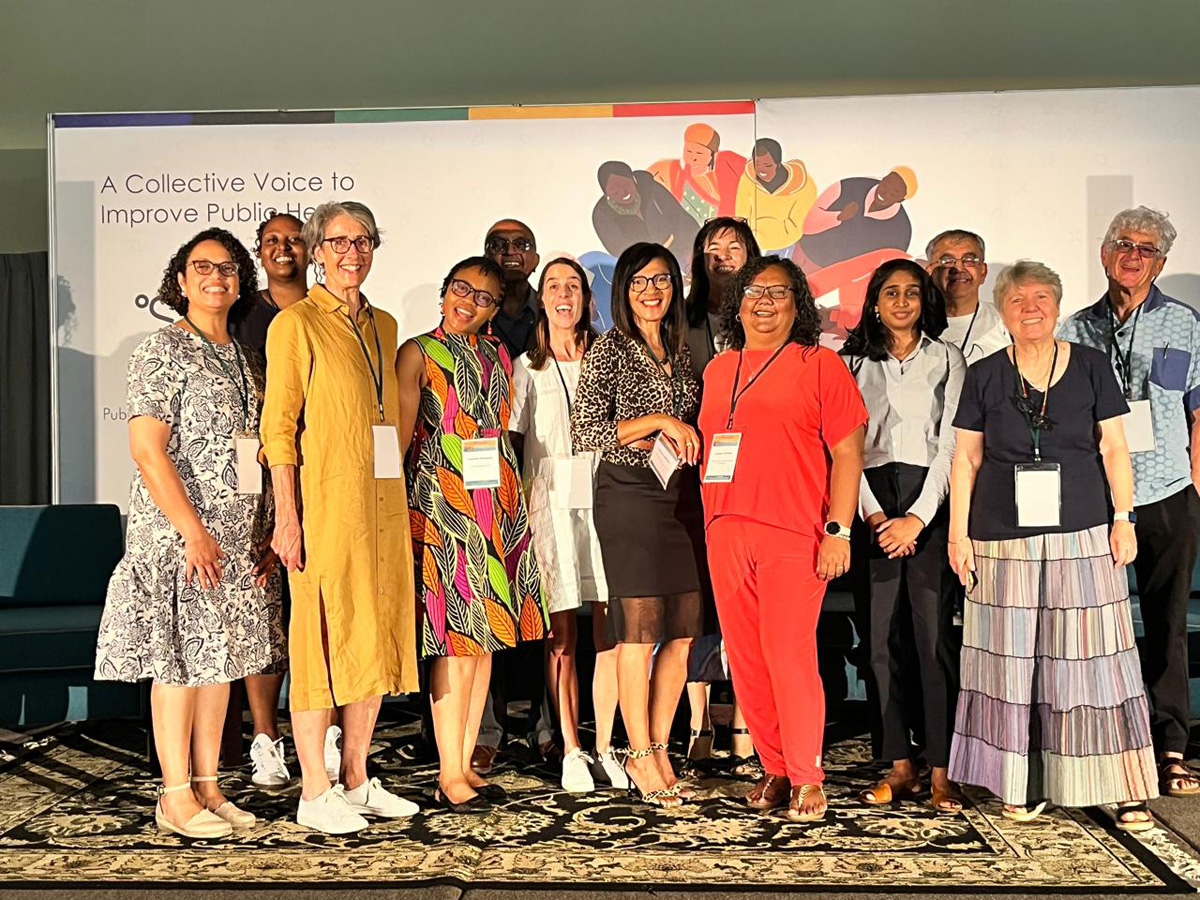
On 7 September 2026, the South African Learning Alliance for the District Health System (SALAD) hosted a one-hour organised session at the World Congress on Public Health in Cape Town, South Africa.
The South African Learning Alliance for the District Health System (SALAD) features in Spotlight’s new in-depth piece, How to thaw a health system frozen in fear, by Joan van Dyk.
On 9 September 2026, SALAD hosted a one-hour organised session at the World Congress on Public Health in Cape Town, South Africa. The session, which was attended by more than fifty local, national and international delegates, included an introduction to the DHS and SALAD as a learning network before a four-person panel shared their perspectives collaborative learning for health system strengthening.
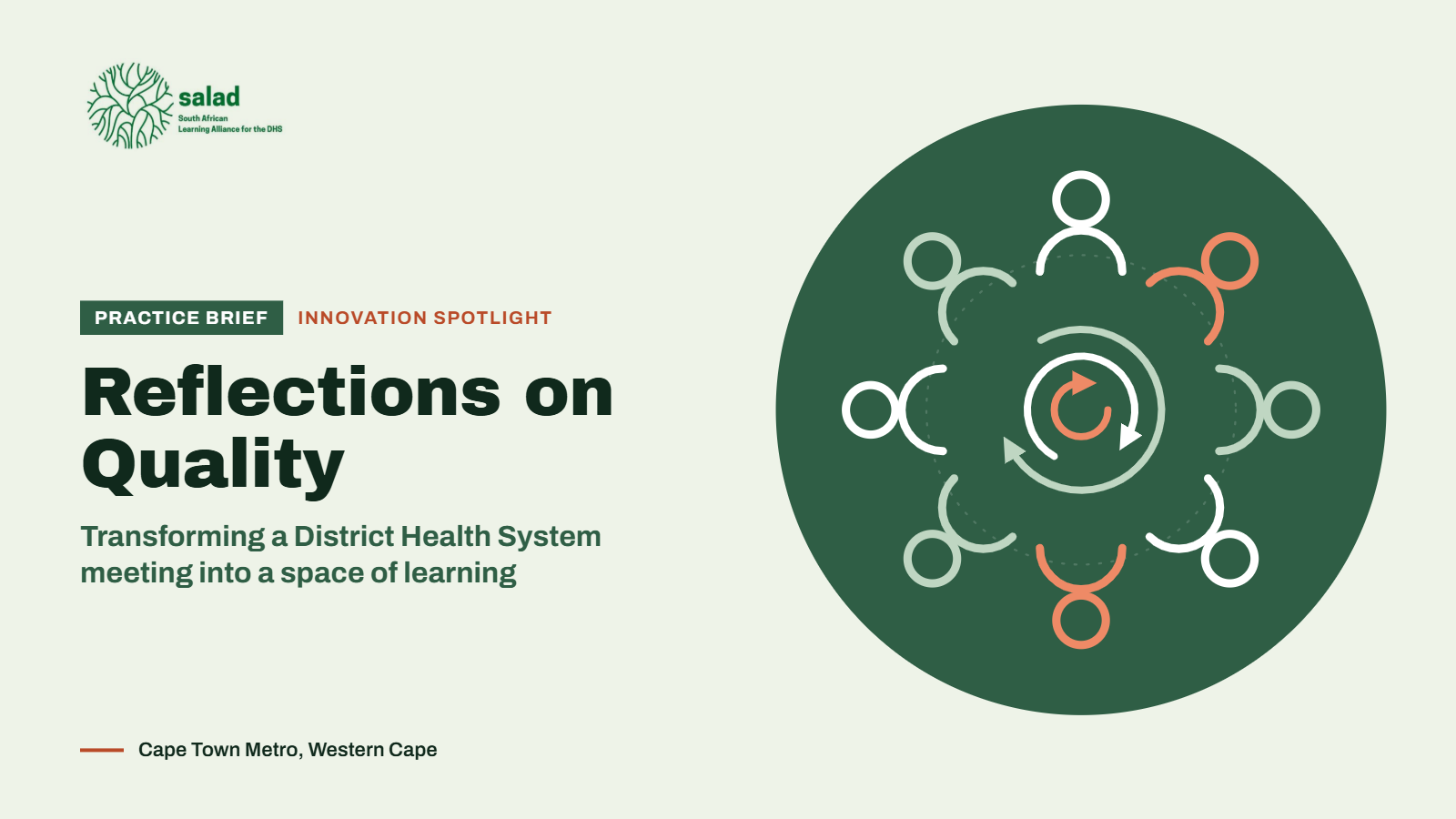
When quality meetings had lapsed, one Cape Town substructure re-launched them as quarterly Reflections on Quality (RoQ) sessions built for reflection, peer learning and wider participation. Junior staff now engage with managers as colleagues — and learning is spreading across the district, at no extra cost.
Overall, current evidence suggests that there is a need to rethink and advance health system learning and management development in South Africa. This policy brief outlines the key conclusions we have reached in the SALAD network on strengthening leadership and management capacity in and for the DHS. The focus in this brief is on the development of leadership capacity.
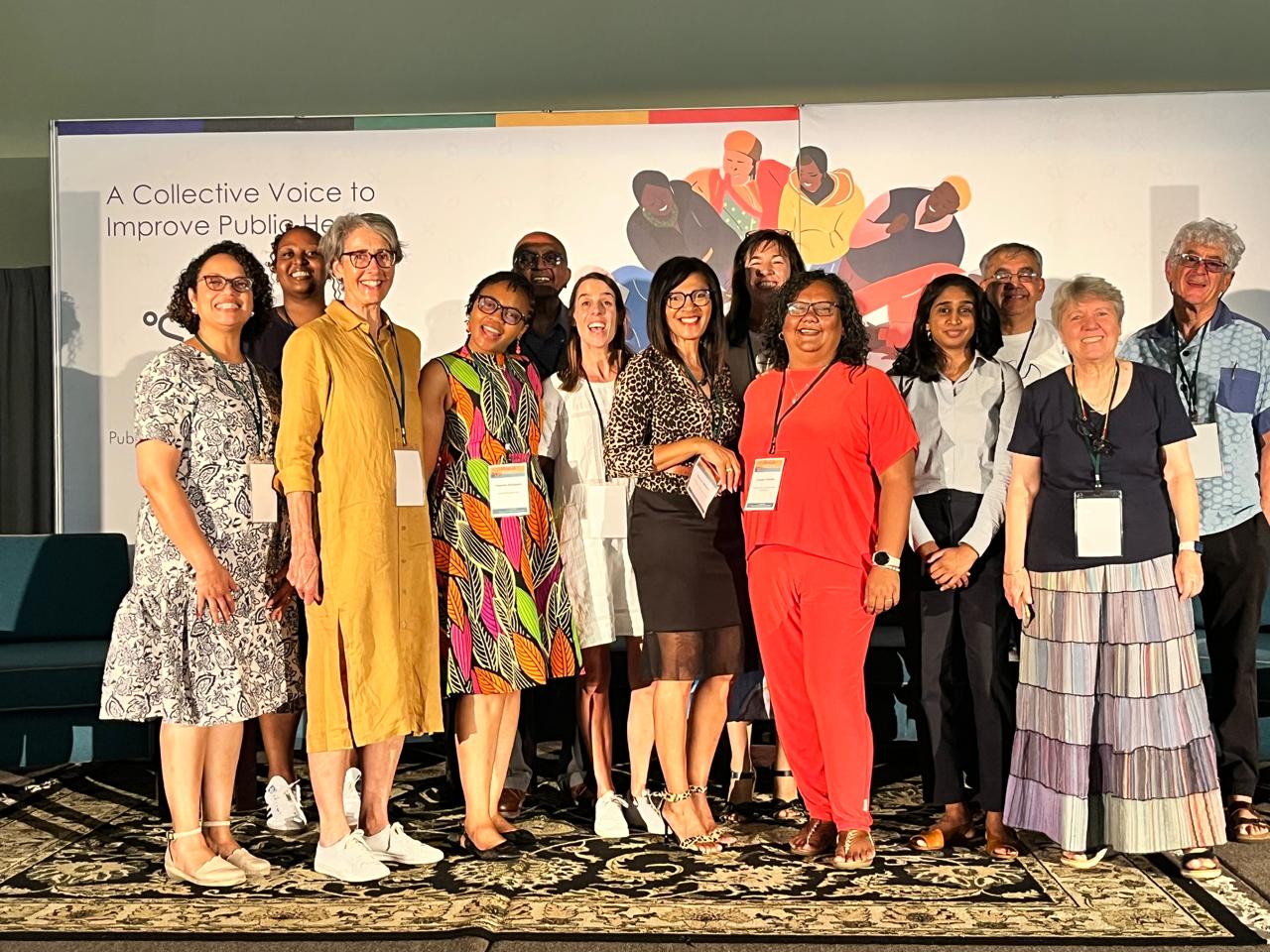
At the April 2025 PHASA Conference, the South African Learning Alliance for the District Health System (SALAD) hosted a dynamic workshop titled “Advancing Knowledge for District Health System Strengthening.”